Datum Machine Datum Machine

Top Benefits of Laser Automation for Mass Production

Time:2026-09-25 Author:Isabella
0%

Laser automation is changing how manufacturers manage repeatable cutting, marking, and welding across high-volume production lines. A focused beam follows programmed paths, while sensors and motion controls help maintain consistent positioning across parts. Operators can load a fixture, confirm the recipe, and monitor the process instead of guiding every pass by hand. Less manual variation. Still, consistent results depend on stable materials, suitable fixtures, and careful setup.

For production managers, the value is not simply faster cycle times. Automated laser cells can reduce handling, support traceable process records, and keep work moving across shifts when properly integrated. So, how does laser automation support mass production? It combines controlled motion and repeatable energy delivery with part identification and process feedback. A sheet-metal line, for example, may use vision to locate a blank before cutting, then transfer parts to the next station with fewer manual touches. Results vary with material, geometry, maintenance, and process settings. A poorly tuned cell can repeat defects just as efficiently. That is worth remembering.

This article examines potential benefits such as higher throughput, more consistent quality, improved ergonomics, and better use of production data. Each depends on thoughtful application, not automation alone. Teams should assess cycle-time targets, changeover frequency, extraction requirements, and operator training before investing. They should also test representative parts and monitor quality after launch. When these details are measured honestly, laser automation can become a practical production tool—not a promise of effortless manufacturing.
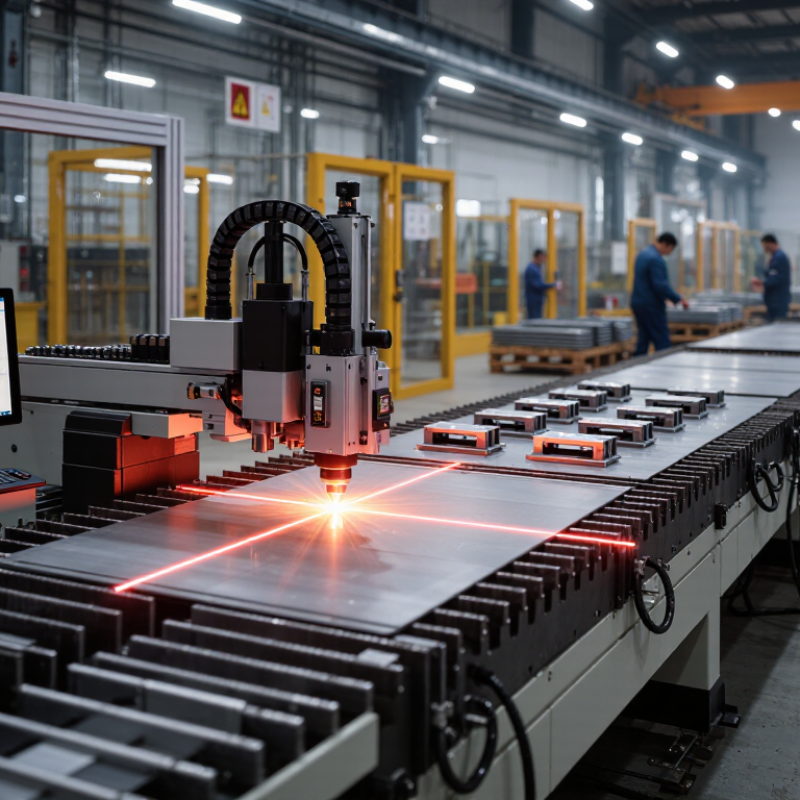
Top Benefits of Laser Automation for Mass Production

How Laser Automation Integrates into Mass-Production Workflows

Laser automation works best when it is designed around the production line, not added as a standalone machine. Parts can arrive by conveyor or robot, settle into a locating fixture, and pause for sensors to confirm position. A camera may check orientation before the laser marks, cuts, or welds each component. The control system can select settings from a part code, reducing manual entry and mix-ups. Small details matter: fixture wear or a dusty lens can shift results.

The laser cell also needs to communicate with upstream and downstream equipment. A completed part may receive a pass signal, move to inspection, or be diverted for review. Cycle-time data and process records help teams spot drift across a shift. But integration is rarely seamless. Not at first. Operators may still need to clear jams, inspect odd-looking marks, and refine handling rules. Pilot runs with real parts can reveal issues that simulations miss, such as glare on a reflective surface or a fixture that slows loading. Extraction, guarding, and interlocks should be planned into the cell, alongside maintenance access. A fast laser is useful only when the surrounding workflow can keep it supplied and safely manage its output.

Increasing Output Through Faster and More Consistent Processing

Laser automation can increase mass-production output by reducing the time between parts and keeping each processing cycle more consistent. A programmed path repeats the same cut or weld location, while automated loading can limit pauses between jobs. On a busy line, even small savings matter. A few seconds per part can add up across a full shift.

Consistency also makes production easier to monitor. Operators can compare cycle times, inspect edge quality, and spot changes before rejects accumulate. For example, a shift supervisor might notice that cut edges become rough after a nozzle begins to wear. Automation does not prevent every defect, though. Material variation, fixture movement, or incorrect settings can still disrupt a run. Sensors and regular checks help, but they need sensible thresholds and trained staff.

The gains depend on the whole workflow, not just the laser. A machine that finishes quickly may still wait for parts to arrive or finished pieces to be cleared. Setup deserves attention. Poorly planned tool paths can create extra movement, and rushed programming may slow the first production run. It happens. Teams should measure actual cycle times under normal conditions, including loading, inspection, and changeovers. That fuller picture helps identify where faster processing is real—and where another bottleneck is hiding.

Improving Product Quality with Precise, Repeatable Operations

In mass production, product quality depends on each operation landing in the same place, at the same depth, and with similar energy. Automated laser systems can follow programmed paths with controlled speed and positioning, reducing variation caused by hand movement. On a metal panel, a fixed fixture and verified focus help keep engraved marks aligned across successive parts. Small details matter.

Repeatability also supports cleaner inspection. When settings and motion are recorded, teams can compare a faint mark or rough edge with known process conditions instead of guessing. Sensors and scheduled checks can flag drift in focus, lens condition, or part placement before defects spread through a batch. That does not make inspection optional. Surface finish, coating thickness, and material changes can still affect results, so sample checks remain useful.

The gains depend on setup. A recipe that works on one material lot may need adjustment when reflectivity or thickness shifts, and overly aggressive settings can cause discoloration or excess heat. Operators should validate the process on representative parts, document acceptable limits, and review borderline results rather than quietly passing them. Not quite automatic. Even a well-tuned cell can pause for cleaning, recalibration, or a fixture that no longer seats squarely.

Top Benefits of Laser Automation for Mass Production — Improving Product Quality with Precise, Repeatable Operations

Quality Dimension Production Data to Track How Laser Automation Can Help Recommended Verification
Positioning consistency Feature location deviation, recorded in millimeters, across parts and production shifts. Programmed motion paths and controlled fixturing help place each operation consistently. Actual accuracy depends on the machine, optics, calibration, and workholding. Measure feature locations against the engineering drawing; review results by machine, shift, and product lot.
Dimensional repeatability Variation in cut dimensions, weld location, or marked-feature size. Stored process recipes can repeat defined settings such as path, speed, and laser power, reducing reliance on manual adjustments between cycles. Use calibrated inspection equipment and trend measurements on a control chart.
First-pass yield Accepted units without rework or repair ÷ total units inspected × 100%. Consistent programmed operations can reduce variation-related defects when the process is properly developed and monitored. Compare yield by product, recipe, shift, and defect category; keep inspection criteria consistent.
Defect and rework rate Defective or reworked units ÷ total units produced, reported by defect type. Automated parameters and repeatable paths can help limit errors associated with manual operation. Results depend on material, process design, and maintenance. Track defects such as incomplete cuts, weld discontinuities, and unreadable marks using the applicable quality standard.
Weld quality Weld dimensions, discontinuities, leak results, or strength-test results, as required by the part specification. Automation can maintain a programmed beam path and process sequence. A laser weld still requires suitable joint fit-up, material preparation, and validated parameters. Apply the inspection and destructive or nondestructive tests specified for the product and weld procedure.
Cut-edge quality Kerf width, edge roughness, burr or dross presence, and dimensional conformity. Controlled motion and process settings support consistent cutting. Outcomes vary with material type, thickness, assist gas, focus, and laser parameters. Inspect representative parts from each material and thickness combination against drawing and finish requirements.
Marking legibility and traceability Code readability, marking position, and successful code verification rate. Automated marking can apply the same programmed text, symbols, or machine-readable codes at a defined location on each part. Verify codes with a suitable reader and use the required grading method where code quality standards apply.
Process stability Laser power, travel speed, focus condition, alarms, and inspection results over time. Recipe control and process monitoring make operating conditions easier to record and compare. Monitoring does not replace calibration or product inspection. Set documented operating limits, review alarms, and investigate trends or out-of-control results.
Tool-related variation Quality changes associated with tool wear, tool changes, and maintenance events. Laser processing is non-contact, so the laser does not wear through physical contact with the workpiece like a cutting tool. Optics and other system components still require inspection and maintenance. Compare quality and downtime records before and after maintenance; inspect optics according to equipment guidance.

Quality improvements are application-dependent, not guaranteed. Establish baseline results and acceptance limits from the product drawing, process validation, and applicable quality requirements.

Reducing Costs Through Lower Waste and Less Manual Labor

Top Benefits of Laser Automation for Mass Production

Laser automation can lower unit costs by reducing scrap and limiting repetitive handwork. A programmed beam follows the same path across thousands of parts, helping keep cuts and welds consistent. That matters when a small edge defect can send an entire component to rework. Less rework means fewer replacement blanks, less machine time, and less material in the waste bin. The savings depend on the part and process, though; automation is not automatically cheaper.

The International Federation of Robotics reported 541,000 industrial robot installations worldwide in 2023, with 4.28 million robots operating in factories. Those figures show how widely manufacturers are adopting automation, but they do not prove a specific laser cell will reduce costs. A plant should compare scrap rates, labor hours, cycle times, and maintenance before and after installation. Track the results over several production runs. One good week can mislead.

Tips: Start with a repeatable, high-volume task, such as trimming sheet parts or welding the same joint. Record baseline scrap and hands-on labor. Check whether operators can load parts while the laser runs. Keep time for fixture adjustments and training in the budget; these costs are easy to underestimate. And inspect the output closely. A faster process can still produce costly defects.

Supporting Flexible Production While Enhancing Workplace Safety

Laser automation supports flexible production when product variants change faster than fixed tooling can follow. A programmable cell can switch between cutting paths, marking layouts, or weld sequences using validated job recipes. Operators can load a new batch, confirm the correct recipe, and inspect a first-off part before full-rate production. That check matters. Camera guidance and sensors can detect position shifts, while logged settings help teams trace inconsistent results. Still, flexibility is not automatic; poorly maintained fixtures or untested recipes can create scrap and downtime.

Safety gains come from designing the cell around the beam, not merely adding a warning label. Suitable enclosures, interlocked access doors, fume extraction, and controlled loading zones help reduce exposure during normal operation. These controls need routine inspection, especially after maintenance or layout changes. Staff need clear entry and isolation procedures. They also need a contact for unusual interlock behavior. Small details matter. Automation can reduce repetitive handling, but it does not remove every hazard. Honestly, changeovers can feel awkward at first. Trial runs, practical training, and near-miss reviews help reveal gaps before higher production volumes make them harder to fix.

Top Benefits of Laser Automation for Mass Production

Supporting flexible production while enhancing workplace safety

The chart compares common potential benefits on an illustrative 0–100 index; these are not measured industry results. Actual outcomes depend on the process, equipment, and safety controls. Automated cells can help standardize repetitive tasks, support recipe-based changeovers, and reduce direct operator exposure to processing areas when properly designed and guarded.

FAQS

How does laser automation fit into a production line?

Parts arrive by conveyor or robot and settle into a locating fixture. Sensors check their position before processing.

How can automated settings reduce mix-ups?

The control system can select settings from a part code, reducing manual entry. A wrong code can still cause problems.

Can laser automation increase production speed?

Automated loading and repeatable paths can reduce pauses between parts. A few seconds saved per part can add up across a shift.

What can slow down an automated laser cell?

The laser may finish quickly but wait for parts or inspection. Loading, changeovers, and jam clearing also affect the real cycle time.

How does automation help keep product quality consistent?

Fixed positioning and programmed paths help repeat marks, cuts, or welds. For example, a metal panel can stay aligned in a verified fixture.

Does automation remove the need for inspection?

No. Sample checks can catch rough edges, faint marks, or changes in surface finish. Inspection still matters.

What signs may show that a process is drifting?

Rough cut edges may point to a worn nozzle. A dusty lens or shifting fixture can also affect results.

Why should teams run pilot tests?

Real parts can reveal glare, slow loading, or handling issues that simulations miss. Not at first. Operators may need to refine the process.

What should teams include when planning a laser cell?

Plan for communication with nearby equipment, maintenance access, guarding, and extraction. A fast machine alone is not enough.

Conclusion

Laser automation fits into mass-production workflows by handling repetitive tasks such as cutting, marking, welding, and engraving with minimal interruption. It can be integrated with production lines and automated handling systems, helping products move smoothly between stages. When asking “how does laser automation support mass production,” the answer lies in its ability to process items quickly and consistently while adapting to different product designs and production requirements.

Automated laser processes deliver precise, repeatable results that can reduce defects, material waste, and the need for time-consuming rework. They also lower reliance on manual labor for repetitive operations, helping control costs and improve throughput. With appropriate safeguards and less direct handling of workpieces, laser automation can support a safer workplace. Together, these benefits help manufacturers increase output, maintain product quality, and respond more flexibly to changing production needs.

Isabella

Isabella

Isabella is a dedicated marketing professional with a sharp focus on driving brand growth and engagement through strategic content creation. With an extensive background in digital marketing, she combines her passion for storytelling with her keen understanding of industry trends to deliver......