Datum Machine
Automated laser cutting turns digital designs into precise parts through a coordinated sequence: software prepares the toolpath, motion systems position the material, and a focused beam cuts along programmed lines. Sensors and controllers help maintain speed, focus, and cut quality. The details matter: a slightly misaligned nozzle or inconsistent sheet can leave rough edges, even on a modern machine. How does automated laser cutting work? This guide explains the process and introduces ten leading Chinese manufacturers, with attention to equipment, applications, and practical selection factors.
Automation is part of a wider manufacturing shift. The International Federation of Robotics’ World Robotics 2024 report recorded 541,302 industrial robots installed worldwide in 2023, showing the scale of investment in automated production. That figure covers industrial robots, not laser cutters, so it should not be read as a laser-market statistic. A useful expert perspective belongs here, too: Dr. Reinhart Poprawe is a recognized laser-manufacturing researcher, but no source text was provided to verify a direct quotation from him. Rather than invent words, this introduction avoids attributing a fabricated quote. The distinction is important. A machine’s rated speed alone does not tell the whole story; material thickness, assist gas, nesting, maintenance, and operator skill all shape real output. Some comparisons also depend on factory conditions, not brochure figures. Look closely.
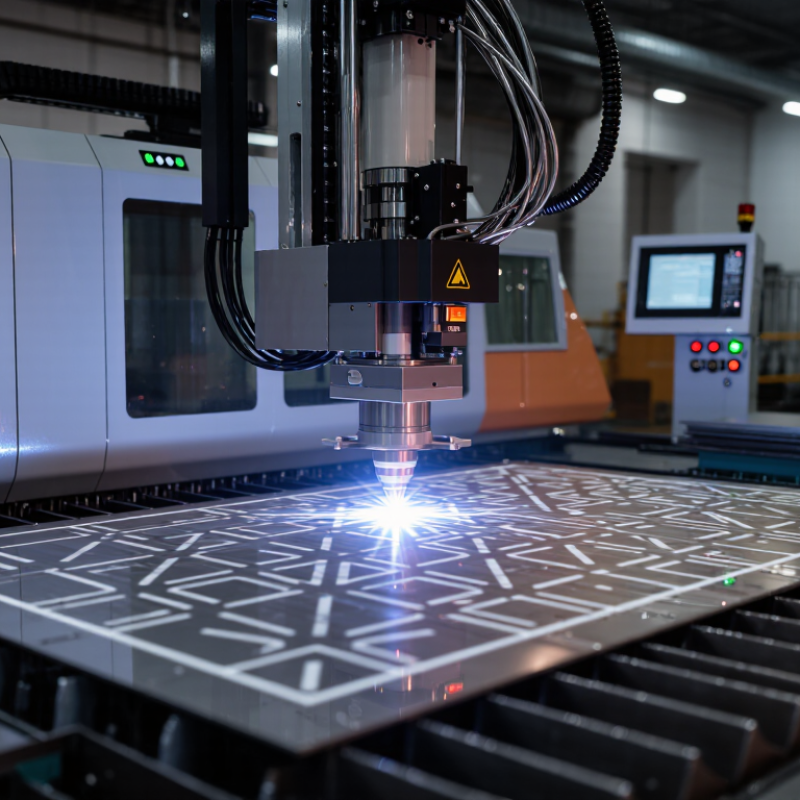
Automated laser cutting uses programmed movement to guide a focused beam across sheet material. A controller follows a digital design and coordinates the cutting head, worktable, and assist gas. The beam heats a narrow path until the material melts, burns, or vaporizes. Edges can be clean. Results still depend on the material, its thickness, beam focus, and machine settings.
Manufacturers use the process to make sheet-metal enclosures, appliance panels, brackets, and vehicle components. Furniture makers cut decorative screens and precise frame parts. In electronics production, it can create small openings and detailed shapes in thin metal sheets. Small parts, too. Because designs can be changed in software, one machine may handle short custom runs as well as repeated production, provided each setup is checked.
Operators inspect the first cut for rough edges, heat discoloration, or dimensions that drift from the drawing. Reflective metals and thicker stock may need different equipment or parameters, so not every laser suits every job. Dust and fumes also require proper extraction. Automation improves repeatability, but it does not remove the need for skilled setup and regular quality checks. A test cut is often worthwhile, even when the program looks right.
An automated laser cutting system is a coordinated machine, not just a powerful beam. Its laser source generates the beam, while the controller converts a digital part file into cutting paths. Depending on the design, mirrors or a fiber-optic cable carry the beam to the cutting head. Alignment and power stability matter. Small changes can leave rough edges.
Inside the cutting head, focusing optics concentrate the beam on the sheet. A nozzle directs assist gas toward the cut, helping remove molten material. Servo-driven axes move the head or workpiece along programmed coordinates, while the cutting bed supports the material and allows debris to fall away. Sensors can monitor height or detect process changes.
The safety enclosure and fume extraction system help contain light, sparks, and smoke. Keep the nozzle clean.
During operation, the controller coordinates beam output, motion, and gas flow. Material type, thickness, focus position, and feed speed all affect edge quality. A practical check is to inspect the first cut for dross, incomplete separation, or heat discoloration before running a full sheet. Even a carefully configured system can need adjustment when material batches vary. That part is easy to underestimate. Regular lens, nozzle, and filter checks help keep performance consistent.
A laser-cut part starts as a digital drawing, usually a CAD file defining its edges, holes, and tolerances. CAM software converts that geometry into toolpaths, then arranges parts on a sheet to reduce scrap. The operator checks material type, thickness, focus position, and assist-gas settings before the job begins. Small errors travel. A misplaced origin or wrong sheet thickness can spoil an entire batch. The International Federation of Robotics’ World Robotics 2024 report counted 4,281,585 industrial robots operating worldwide in 2023, a 10% increase from 2022. That figure reflects broader factory automation, not laser cutters alone.
During cutting, the programmed head follows each path, piercing the sheet and directing a focused beam through the material. Assist gas clears molten metal from the cut. Sensors and operator checks can flag poor edges, incomplete cuts, or heat distortion, but inspection still matters. Finished parts may need deburring before measurement against the drawing. Deloitte’s 2024 Smart Manufacturing Survey found that 86% of surveyed manufacturers expect smart manufacturing to become a primary source of competitiveness within five years. Yet a connected workflow cannot fix a flawed design automatically. A real production job may still need a revised setting, a fresh test piece, or a human judgment call.
Illustrative job timeline: example minutes for each workflow stage, not an industry benchmark. Total example time: 41 minutes.
A cutting job typically starts with a CAD design, which is prepared and nested in CAM software. The operator then sets up the machine and material; the laser cuts the programmed paths, and the finished parts are removed and inspected.
China Top 10 Automated Laser Cutting: How Does It Work?
Automated laser cutting links sheet handling, machine control, and safety systems into one workflow. A loader lifts metal sheets with vacuum cups, then places them onto a shuttle table. Sensors check sheet position before the cutting head follows programmed paths. Servo drives, autofocus, and gas-pressure control help maintain a consistent cut as the head moves. Small details matter. A dirty nozzle or warped sheet can still spoil an edge.
The International Federation of Robotics’ World Robotics 2024 report recorded 541,302 industrial robot installations worldwide in 2023. That figure covers industrial robots broadly, not laser cutters alone, but it shows how widely automated handling is spreading. In a cutting cell, robots can unload finished parts and separate scrap, reducing repetitive lifting. Yet poor part placement can cause collisions or wasted sheets. Automation is not magic.
Safety depends on more than keeping hands away from the beam. Enclosed cutting areas, interlocked access doors, and monitored operating zones help prevent exposure during active cutting. Fume extraction removes smoke and fine particles from the work area. Operators still need training, inspection routines, and clear recovery procedures for jams. A useful reminder: the sensors need checking, too. Automation can reduce routine risks, but weak maintenance or incorrect setup can undermine its safeguards.
| No. | Automation area | How it works | Control of material handling and precision | Safety and practical considerations |
|---|---|---|---|---|
| 1 | Automatic sheet loading | A loader uses suction cups or magnetic lifting equipment to transfer a sheet from a stack to the cutting table. | Sensors and programmed motion help position the sheet and reduce manual lifting and placement variation. | Load limits, sheet stability, and exclusion zones must be managed; operators should not enter a moving loader’s work area. |
| 2 | Sheet alignment and edge detection | Mechanical references, probing, or vision sensors identify sheet edges and help establish the sheet’s position on the table. | The controller can compare the detected sheet position with the programmed cutting layout and compensate for small placement offsets. | Sensors need clear views and regular checks; damaged or badly distorted sheets may not align reliably. |
| 3 | Automated nesting and job scheduling | Nesting software arranges part shapes on a sheet, while production software can send approved cutting jobs to the machine. | Layouts account for part geometry, spacing, and cutting sequence; the actual result depends on the material, process settings, and machine configuration. | Programs should be checked before production, particularly for sheet size, material type, thickness, and cutting instructions. |
| 4 | CNC motion control | A computer numerical control (CNC) system coordinates the cutting head’s movement along programmed paths. | Motion commands, drive feedback, and machine calibration work together to follow the programmed geometry; achievable accuracy varies by machine and setup. | Maintenance of guides, drives, and calibration is important. A commanded path does not by itself guarantee a particular finished-part tolerance. |
| 5 | Automatic focus and height sensing | The cutting head adjusts focus and uses a height-sensing system, commonly capacitive sensing, to follow the sheet surface. | Maintaining the intended nozzle-to-sheet distance supports consistent cutting conditions, especially when the sheet is not perfectly flat. | Nozzle condition, sensor calibration, and surface contamination can affect sensing and cut quality. |
| 6 | Automatic laser and process settings | The machine applies programmed process parameters, such as laser output, feed rate, and assist-gas settings, for the selected job. | A consistent recipe can reduce setting variation between repeat jobs, but suitable parameters depend on the laser, material, thickness, and cut requirements. | Use approved process settings and compatible assist gas; incorrect settings can cause poor cuts, excessive heat, or equipment damage. |
| 7 | Automatic nozzle and condition checks | Depending on the system, sensors or a check station can identify nozzle condition, centering, or other process issues before cutting resumes. | Checks can help detect conditions that may affect beam alignment, gas flow, or cut consistency; available functions differ by machine. | Inspection and replacement procedures should follow the machine maker’s instructions, with the laser safely disabled when required. |
| 8 | Part unloading and sorting | Unloading devices, conveyors, or robotic equipment can remove finished parts and move them to collection or sorting areas. | Part programs and handling equipment can support separation by job or destination, reducing repeated manual handling. | Cut parts and scrap can have sharp edges or remain hot. Guarding and safe access are needed around conveyors and robots. |
| 9 | Fume extraction and filtration | An extraction system draws cutting fumes and particles away from the work area, often through a filtered extraction unit. | Extraction zones can be coordinated with machine operation to capture contaminants near the cutting area. | Filter selection and maintenance should suit the material being cut. Extraction does not replace required workplace exposure controls. |
| 10 | Enclosures, interlocks, and safety monitoring | Enclosures, access-door interlocks, emergency stops, and control-system checks help prevent or stop hazardous machine operation. | Safety controls can restrict operation when a monitored access point is open or a fault condition is detected. | Laser safety depends on the complete installation, enclosure, interlocks, procedures, and applicable regulations. Never bypass safety devices. |
Note: These are common automation functions used in industrial laser-cutting workflows, not a company ranking. Availability and performance vary with machine design, material, thickness, tooling, maintenance, and operating conditions.
China’s leading automated laser-cutting equipment manufacturers compete through more than laser power. Their systems typically combine a fiber-laser source, CNC control, cutting head, material-handling equipment, and fume extraction. The beam follows programmed paths, melting or vaporizing material while assist gas clears the cut. Automated loading and unloading can reduce manual handling, especially on repeat production runs. Small details matter: a sheet must sit flat, and the nozzle needs the correct clearance.
China’s manufacturing ecosystem is substantial. The International Federation of Robotics’ World Robotics 2024 report recorded 276,288 industrial robot installations in China during 2023, around 51% of global installations. This figure covers industrial robots, not laser-cutting machines, but it indicates strong automation capacity. When comparing manufacturers, check cut samples, stated tolerances, service response, software compatibility, and the availability of replacement parts. Request tests using your own material and thickness. A quoted cycle time can mislead; loading delays and changeovers are easy to undercount.
Tips: Ask for a full-shift trial, not just a polished demonstration. Inspect edge quality, slag, and repeatability. Confirm who handles commissioning and operator training. Small gaps in support can become costly downtime.
A CAD file defines part edges, holes, and tolerances. CAM software turns these details into cutting paths and arranges parts on a sheet.
Check the material, sheet thickness, cutting-head focus, and assist-gas settings. Confirm the sheet is positioned correctly. Small setup errors can spoil a whole batch.
The head follows programmed paths and directs a focused beam through the sheet. Assist gas clears molten material from the cut. Edges still need inspection.
Vacuum cups can lift sheets onto a shuttle table. Robots may unload parts and separate scrap, reducing repetitive lifting. Placement errors remain possible.
Enclosed cutting areas, interlocked doors, and monitored zones help limit exposure during operation. Fume extraction removes smoke and fine particles. Sensors need regular checks.
No. A dirty nozzle, warped sheet, or incorrect setup can damage edge quality. Operators may need a test piece or revised settings.
Request samples using your own material and thickness. Check tolerances, edge quality, software compatibility, replacement parts, and service response. Cycle times can omit changeovers.
A longer trial can reveal loading delays, inconsistent cuts, and support gaps that a short demonstration may miss. Inspect slag and repeatability, too. Small details count.
This article explains how does automated laser cutting work, from the basic role of a focused laser beam to its use in manufacturing metal parts, machine components, and custom products. It introduces the main elements of an automated system, including the laser source, cutting head, motion platform, control software, sensors, and material-handling equipment. Together, these components guide the beam along precise paths while managing power, speed, and cutting conditions.
The article also follows a typical job from a digital design through programming, setup, cutting, and inspection. Automation helps load and position materials, maintain consistent accuracy, reduce manual handling, and support safe operation through monitoring and protective features. Finally, it outlines the capabilities buyers may look for when considering China’s automated laser cutting equipment manufacturers, such as system integration, production flexibility, technical support, and suitability for different materials and output needs.
