Datum Machine Datum Machine

What Is the Future of Automated Laser Manufacturing?

Time:2026-10-25 Author:Madeline
0%

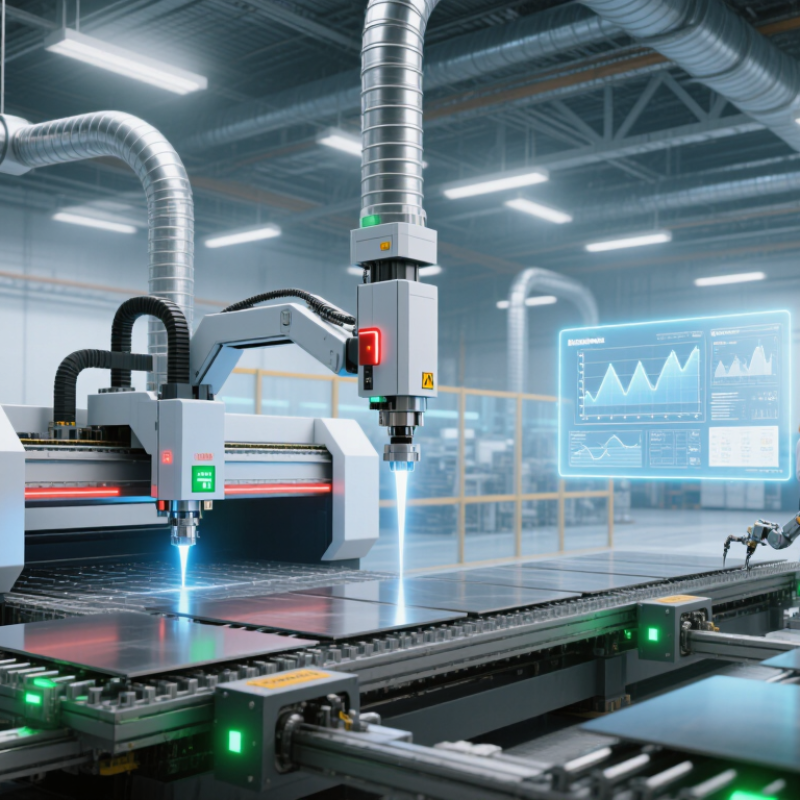
Automated laser manufacturing is moving from isolated cutting and welding machines toward connected, adaptive production cells. A typical cell may combine a fiber laser, robotic arm, vision camera, fume extraction, and real-time sensors. These systems can adjust power, speed, and focus while processing metal surfaces that vary in thickness or reflectivity. The result is faster production with more consistent quality.

Yet automation is not a magic solution. Engineers still inspect calibration data, verify safety interlocks, and review weld or cut quality after production runs. A poorly trained vision system may misread glare as a defect. A contaminated lens can reduce accuracy before operators notice the problem. Practical experience remains essential, especially when unusual materials or complex geometries challenge standard settings.

So, what are the future developments in automated laser manufacturing? This article explores artificial intelligence, digital twins, autonomous process control, and closer integration with manufacturing execution systems. It also considers collaborative robots, energy-efficient laser sources, and predictive maintenance based on sensor data. These developments could reduce waste and improve traceability, but their value depends on reliable data, skilled supervision, and responsible implementation. Some forecasts appear overly confident. Real factories are less predictable than demonstrations. The strongest future systems will therefore combine machine precision with human judgment, transparent testing, and continuous improvement.
What Is the Future of Automated Laser Manufacturing?

What Automated Laser Manufacturing Includes: Robots, Optics, Sensors, and AI

What Is the Future of Automated Laser Manufacturing?

Automated laser manufacturing is moving beyond fixed machines and repetitive motion. Robots can position parts, adjust angles, and manage complex paths around large components. Their value appears clearly when each workpiece has small dimensional differences. However, robot movement alone does not guarantee accurate production.

Optics control the laser beam’s focus, shape, and energy distribution. A slight focal shift can create a wider seam or uneven surface. Sensors watch temperature, reflected light, position, and melt-pool behavior during processing. These measurements provide evidence that engineers can review, not just assumptions from machine settings. Good systems also record calibration results and maintenance history.

AI connects these signals and detects patterns that may escape a tired operator. It can identify unstable processing, predict tool wear, and recommend parameter changes. Still, reflective metals, smoke, and missing data can confuse an algorithm. Human inspection remains essential, especially during process qualification and unusual repairs. In practical workshops, the strongest results come from combining automated decisions with experienced judgment. That balance is not perfect. It requires testing, traceable records, and regular review of failed parts. A sensor may report a stable melt pool while a hidden defect develops beneath the surface. Engineers must challenge the data, inspect samples, and refine the model before trusting it at scale.

IFR Reports 541,302 Industrial Robots Installed Worldwide in 2023

What Is the Future of Automated Laser Manufacturing?

The International Federation of Robotics reports 541,302 industrial robots installed worldwide in 2023. This figure shows how quickly factories are adopting automated production systems. Laser manufacturing benefits from this shift. Robots can move cutting heads, welding tools, or inspection cameras with steady accuracy. They also repeat complex paths without tiring during long production runs.

On a modern factory floor, a robot may position a metal part beneath a focused laser beam. Sensors check distance, temperature, and surface quality in real time. Software can then adjust power or movement before a small defect becomes expensive waste. This combination may improve consistency, shorten setup time, and support safer work around high-energy equipment.

The transition is not frictionless. Integration costs remain significant, especially for smaller manufacturers. Skilled technicians still need to calibrate optics, manage software, and investigate unusual results. Automation does not remove human judgment. It changes where that judgment matters. A system may perform perfectly for thousands of cycles, then fail because dust reaches a lens. Small details matter. Future factories will need stronger maintenance routines, clearer training, and better data practices. The 2023 installation figure is impressive, but robot numbers alone cannot measure manufacturing quality. Poorly planned automation can create faster problems, not better production.

Fiber-Laser Advances: Kilowatt-Class Systems for Cutting and Welding

What Is the Future of Automated Laser Manufacturing?

Fiber-laser advances are moving kilowatt-class systems from specialist cells into everyday fabrication. Higher power can shorten cutting cycles and support thicker metal, while focused beams leave narrow heat-affected zones. On a factory floor, this means fewer tool changes, cleaner edges, and less post-processing. That matters.

Market estimates show strong momentum, although their boundaries differ. Grand View Research valued the global fiber-laser market at about USD 6.2 billion in 2023, with continued double-digit growth expected through 2030. MarketsandMarkets reported a smaller figure and projected growth from roughly USD 3.2 billion in 2023 to USD 5.1 billion by 2028. The gap remains. It reflects different definitions, not necessarily poor research.

For cutting, systems above 6 kW can improve throughput on medium and thick plate when beam quality, nozzle alignment, and assist-gas pressure are controlled. Welding benefits differently. Kilowatt-class fiber sources can stabilize deep-penetration welds on frames, batteries, and structural components. Sensors increasingly monitor reflected light, temperature, and seam position during production. Operators still matter. A sensor may detect instability, but it cannot always explain contamination, joint fit-up, or changing material reflectivity.

A perfect parameter set is still a myth. Practical gains depend on maintenance, training, extraction, and realistic cycle-time studies. The U.S. Department of Energy’s Better Plants resources also emphasize measurement before efficiency claims. Automated laser manufacturing will grow, but disciplined validation will decide whether higher power creates value or merely higher electricity bills.

Inline Monitoring: Melt-Pool Data and AI for Real-Time Defect Detection

Automated laser manufacturing is moving from scheduled inspection to continuous awareness. In a production cell, an inline camera and photodiode can watch the melt pool as each layer forms. Width, brightness, temperature proxies, and spatter patterns become process evidence. A stable pool usually leaves a consistent track. Sudden widening may signal excess energy, while a dim, broken trace can indicate poor fusion. Engineers can compare these signals with cross-section results, rather than trusting them blindly. That comparison builds reliable models from physical evidence.

AI adds speed, but not magic. A trained model can flag unusual signatures within milliseconds and pause or adjust a build before defects spread. It can also rank events for later review, reducing inspection time. However, noisy sensors, changing powder, reflective surfaces, and rare defect types can mislead it. In my experience, the hardest step is defining useful labels. “Abnormal” is not enough. Teams need defect categories, confidence limits, and documented responses. Some predictions will be wrong. That is a reason to monitor performance, not hide uncertainty.

Tips: Keep sensors calibrated and record environmental conditions. Store raw signals beside AI decisions. Check alerts against microscope images and density tests. Set a human review path for uncertain cases. Retrain only after verified data enters the dataset. Begin with one material and one geometry. Expand carefully. A model that works today may fail after a parameter change.

Future Requirements: ISO 10218 Safety, Energy Efficiency, and Cybersecurity

Automated laser manufacturing is moving toward safer, smarter, and more measurable production. ISO 10218 should shape this transition from the design stage. Its safety principles support risk assessment, protective measures, and controlled robot operation. A laser cell needs more than an emergency stop. It may require interlocked doors, guarded access points, verified stopping distances, and clear maintenance procedures. Operators should understand residual risks, not simply follow warning labels. Small gaps matter.

Energy efficiency will become a practical production requirement. Laser systems consume power during cutting, welding, cooling, extraction, and standby periods. Engineers can install meters at each major load and compare energy use with completed parts. Adaptive laser power, efficient cooling cycles, and automatic idle modes can reduce waste. However, lower energy use must not weaken weld quality or operator protection. That trade-off deserves regular review. Real factories are rarely optimized perfectly.

Cybersecurity also belongs inside the safety conversation. Connected controllers, sensors, and production networks can expose valuable process data and create operational risks. Strong authentication, separated networks, controlled remote access, timely patching, and tested backups provide a sensible foundation. Access logs should be reviewed, not merely stored. A forgotten service account can undermine an otherwise advanced cell. Security testing should include realistic recovery drills, because an incident plan that exists only on paper offers limited protection. Reliable manufacturing will depend on documented evidence, competent training, and continuous reassessment.

What Is the Future of Automated Laser Manufacturing?

Future Requirements: ISO 10218 Safety, Energy Efficiency, and Cybersecurity

This timeline shows the publication year of major international standards relevant to automated laser manufacturing. ISO 10218 addresses industrial robot safety, ISO 11553 covers laser-processing machine safety, ISO 50001 provides an energy-management framework, and ISO/IEC 27001 and IEC 62443 support information and industrial cybersecurity. The years indicate standard editions, not compliance levels or performance targets.

FAQS

What benefits do kilowatt-class fiber lasers offer in manufacturing?

Higher power can shorten cutting cycles and handle thicker metal. Edges may look cleaner. Post-processing can decrease. The results still depend on beam quality, alignment, gas pressure, and maintenance.

Can higher laser power improve every production line?

No. Higher power may raise electricity use without creating real value. Measure completed parts, cycle time, quality, and energy consumption. A realistic trial is essential. I would not trust power ratings alone.

How does inline monitoring detect laser defects?

Cameras and photodiodes observe melt-pool width, brightness, temperature signals, and spatter. A widening pool may indicate excess energy. A dim, broken trace may suggest poor fusion. These signals need comparison with cross-sections and density tests.

Can artificial intelligence replace human inspection?

Not reliably. AI can flag unusual patterns within milliseconds. It may pause production or rank events for review. Noisy sensors and changing materials can confuse it. Human review remains necessary for uncertain cases.

How should teams introduce AI monitoring?

Begin with one material and one geometry. Keep raw sensor data beside each AI decision. Define clear defect categories and confidence limits. Retrain only after verified data enters the dataset. Small steps work better.

What safety measures should an automated laser cell include?

The cell may need interlocked doors, guarded access, and verified stopping distances. Emergency stops alone are not enough. Maintenance procedures should explain remaining risks. Small gaps can matter.

How can factories reduce energy use in laser production?

Install meters for the laser, cooling, extraction, and standby systems. Compare energy use with completed parts. Adaptive power and automatic idle modes may reduce waste. Lower consumption must not weaken weld quality or operator protection.

Why is cybersecurity important for automated laser manufacturing?

Connected controllers and sensors can expose process data and disrupt production. Use strong authentication and separated networks. Control remote access carefully. Test backups and recovery drills. Stored logs alone are not enough.

Conclusion

Automated laser manufacturing is evolving into a connected production system that combines industrial robots, precision optics, advanced sensors, and artificial intelligence. Robots can handle repetitive cutting, welding, and material movement, while improved fiber-laser systems provide kilowatt-level power for faster and more accurate processing. The installation of 541,302 industrial robots worldwide in 2023 reflects the growing role of automation in modern manufacturing.

A major future trend is inline monitoring, where melt-pool data, thermal signals, and visual information are analyzed during production. AI can identify irregularities in real time, helping manufacturers reduce defects, material waste, and downtime. When considering what are the future developments in automated laser manufacturing, key priorities include safer machine design based on ISO 10218, greater energy efficiency, reliable human-machine cooperation, and stronger cybersecurity. Together, these advances will support flexible, intelligent, and more sustainable manufacturing systems.

Madeline

Madeline

Madeline is a dedicated marketing professional with a wealth of expertise in our company's core offerings. With a keen understanding of the industry, she brings a unique perspective to her role, consistently delivering high-quality content that highlights the superior aspects of our products. As......