Datum Machine Datum Machine

Why Is CNC Laser Cutting So Popular in Manufacturing?

Time:2026-09-30 Author:Ethan
0%

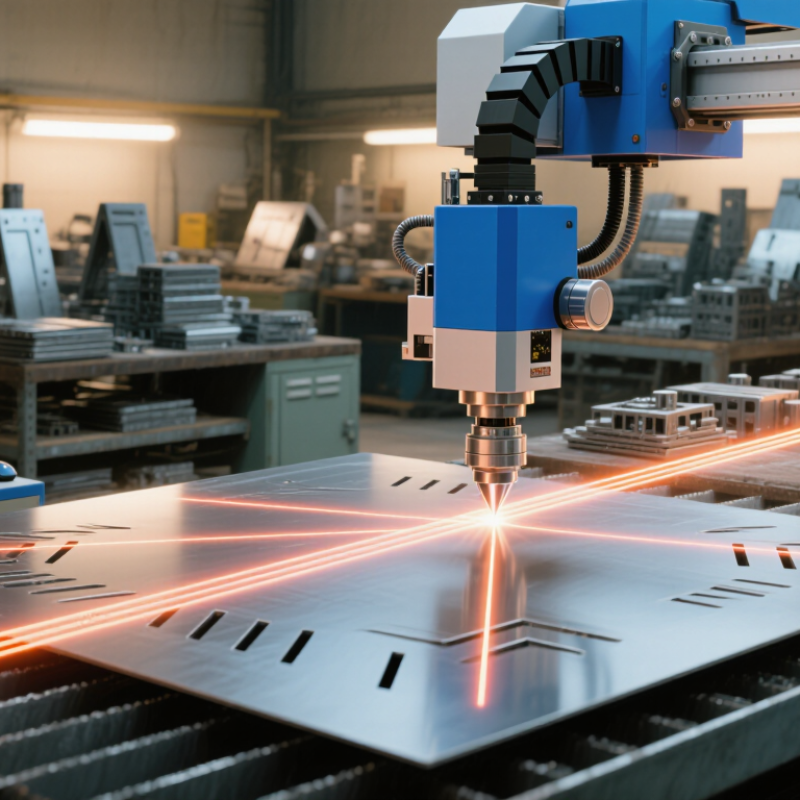
Why is CNC laser cutting popular in manufacturing? The answer starts at the cutting head. A focused beam follows a programmed path across sheet metal, leaving narrow kerfs and clean edges. Operators can move from one profile to another by changing the digital file, rather than building a new cutting tool. That flexibility matters on busy production floors.

Laser-cutting author John Powell’s practical writing highlights the value of matching process capability to the job. A fair paraphrase of that principle is: “The right cutting process is the one that delivers the required accuracy, finish, and throughput for the part.” This is a paraphrase, not a verbatim quotation. It avoids putting unverified words in an expert’s mouth.

CNC control also supports repeatable production. A shop can cut brackets, enclosures, or intricate panels from a shared program, then check the first piece with calipers before running the batch. Less setup can mean faster changeovers. Still, laser cutting is not ideal for every material, thickness, or budget. Assist gas, lens condition, and heat input all affect the result. A dull edge or warped corner can still happen. This guide examines the reasons manufacturers choose CNC laser cutting, where it performs well, and the trade-offs worth checking before investing.
Why Is CNC Laser Cutting So Popular in Manufacturing?

What CNC Laser Cutting Is and How the Process Works

CNC laser cutting uses computer-controlled motion to guide a focused beam across sheet material. The beam melts, burns, or vaporizes a narrow path. A lens concentrates energy at the work surface. Assist gas pushes away molten material and reduces residue. The controller follows a digital drawing, usually a CAD file, to create precise profiles. This makes repeat production faster and more consistent than manual cutting. Yet precision depends on more than software. Material thickness, surface condition, and machine calibration all affect the edge.

During setup, an operator checks the drawing, selects power and speed, and positions the sheet. The cutting head moves along programmed X and Y paths, while focus height may adjust vertically. Small openings require careful piercing before the main cut begins. A finished part may show a bright edge, slight taper, or heat discoloration. These details help technicians judge whether settings were suitable. In my experience, the first test cut deserves attention. A tiny speed change can prevent rough corners, but not every defect has an obvious cause. That uncertainty needs measurement, not guesswork.

Tips: Clean the lens and cutting bed regularly. Confirm the material grade before cutting. Use a test coupon for unfamiliar thicknesses. Watch the first production piece closely. Record settings, gas pressure, and edge results. Good records save time.

How CNC Systems Guide Laser Cutting Operations

CNC systems make laser cutting popular because they turn digital designs into controlled, repeatable movements. A technician imports a CAD file, selects material settings, and generates toolpaths through CAM software. The controller then coordinates laser power, cutting speed, focus height, and assist-gas pressure. Small adjustments matter. A minor focus error can leave rough edges or incomplete cuts.

Modern systems also use sensors to monitor nozzle height, heat, and piercing performance during production. These feedback loops help reduce scrap, especially when cutting thin steel, aluminum, or stainless sheet. The International Federation of Robotics reported 553,052 industrial robots were installed worldwide in 2022, showing how strongly manufacturers value automated precision. Industry research from MarketsandMarkets also identifies laser processing as a growing manufacturing technology, driven by flexible digital control and shorter production cycles. Still, automation is not magic. Poor material calibration can defeat an expensive machine.

Tips: Build a tested parameter library for each material and thickness. Check the first cut under magnification. Watch for burrs, heat tint, and incomplete corners. Keep the lens and nozzle clean. Operators should review nesting efficiency, because unused sheet area quietly increases costs. In my experience, the best results come from combining sensor feedback with practical judgment. Software may suggest a setting, but real material often disagrees. Regular maintenance and documented process checks make CNC laser operations safer, more stable, and easier to repeat.

Why Is CNC Laser Cutting So Popular in Manufacturing? - How CNC Systems Guide Laser Cutting Operations

Data Dimension Typical Data or Range How the CNC System Guides the Operation Manufacturing Benefit
Process control Computer-controlled motion on multiple axes Converts CAD/CAM toolpaths into coordinated movements for the laser head and worktable. Consistent geometry, repeatable production, and reduced manual layout work.
Common laser source Fiber lasers are widely used for sheet and plate metal processing; CO₂ lasers remain suitable for some nonmetal and thicker-material applications. Selects programmed power, pulse or continuous-wave settings, cutting speed, and focus position. Supports flexible processing across different materials and thicknesses.
Material compatibility Common materials include carbon steel, stainless steel, aluminum, brass, copper, and certain engineered nonmetals. Uses material-specific cutting libraries and parameter tables for power, speed, focus, and assist gas. Improves setup consistency and reduces trial-and-error adjustments.
Cutting speed Often faster than mechanical cutting for thin and medium-gauge sheet, but actual speed varies with material, thickness, laser power, and contour complexity. Adjusts feed rate during straight cuts, corners, small holes, and acceleration or deceleration zones. Shorter cycle times and higher throughput for suitable jobs.
Kerf width Typically narrow, commonly around 0.1–0.3 mm, depending on the machine, material, thickness, and process settings. Applies kerf compensation to offset the programmed path and maintain dimensional accuracy. Enables fine features and efficient material utilization.
Dimensional repeatability Industrial machines commonly achieve repeatability in the hundredths-of-a-millimeter class under controlled conditions; specifications vary by machine. Uses calibrated axis motion, homing routines, programmed offsets, and feedback systems where available. Helps maintain part-to-part consistency and simplifies downstream assembly.
Assist gas control Oxygen, nitrogen, or compressed air may be selected according to material and required edge condition. Controls gas type, pressure, and timing to remove molten material and protect the cut zone. Improves edge quality, cutting stability, and process repeatability.
Nesting efficiency Advanced nesting can substantially reduce scrap compared with manual part arrangement; savings depend on part geometry and order mix. Arranges parts automatically, manages common-line cutting where appropriate, and maintains minimum spacing rules. Lowers material waste and improves sheet utilization.
Piercing strategy Piercing time depends on material type, thickness, laser power, and programmed technique. Chooses piercing power ramps, dwell time, position, and sequence to limit spatter and lens contamination. Reduces defects at entry points and supports stable unattended production.
Focus and height control Automatic capacitive or optical sensing is commonly used on industrial cutting machines. Maintains the programmed nozzle-to-material distance and adjusts focus for the selected material. Improves cut quality when sheet flatness or surface position changes.
Automation level Optional systems include sheet loaders, unloaders, pallet changers, part sorting, and production monitoring. Coordinates material handling, cutting programs, job queues, and machine status signals. Reduces handling labor and supports longer periods of lights-out or semi-automated production.
Design flexibility The same machine can produce holes, slots, profiles, tabs, and intricate contours without dedicated cutting dies. Reads updated CAD/CAM files and changes toolpaths through software rather than mechanical tooling. Makes prototypes, short runs, and customized parts more economical.
Quality monitoring Sensors may monitor reflected light, nozzle position, pressure, temperature, and cutting behavior, depending on system configuration. Detects abnormal conditions and can pause, adjust, or report the process when limits are exceeded. Helps reduce scrap, improve process stability, and support preventive maintenance.

Note: Values are representative industry ranges or practices. Actual performance depends on laser power, machine design, material grade, thickness, assist gas, tooling condition, and programmed parameters.

Materials and Parts Suited to CNC Laser Cutting

CNC laser cutting suits manufacturers because it handles many materials with speed, accuracy, and repeatable results. Mild steel produces clean edges for brackets, frames, mounting plates, and machine guards. Stainless steel works well for panels, enclosures, kitchen components, and corrosion-resistant assemblies. Aluminum is useful for lightweight covers and structural parts, although its reflectivity and heat transfer require careful settings. Brass and copper can also be cut, but they demand suitable equipment and experienced parameter control.

Nonmetal sheets, including acrylic, plywood, and some engineering plastics, may be processed with other laser systems. These materials support signs, protective covers, templates, and prototype parts. A well-prepared digital drawing reduces setup time and keeps hole positions consistent across production batches. Small slots, ventilation patterns, and complex outlines are practical examples. Tight tolerances still depend on material thickness, machine condition, and final inspection.

Tips: Match the laser type to the material. Check the cutting chart before production. Leave enough spacing between small features to prevent distortion. Deburr edges when operators will handle the parts. In real workshops, the first cut is not always perfect. Heat can warp thin aluminum, and reflective metals may expose weak settings. A test piece often prevents a costly batch error. That extra step feels slow, but it usually protects quality and delivery schedules.

Manufacturing Benefits Behind Its Growing Popularity

CNC laser cutting is gaining ground because it converts digital drawings into precise parts with limited manual intervention. On a typical shop floor, an operator can load a sheet, set the program, and monitor a controlled cutting cycle. The narrow kerf reduces unnecessary material loss. Clean edges can also reduce grinding, especially on thin steel and aluminum.

Fortune Business Insights estimated the global laser cutting machine market at USD 6.83 billion in 2023. Its 2024 report projects the market to reach USD 11.26 billion by 2032.

This growth reflects practical manufacturing benefits, including faster production, repeatable accuracy, and easier design changes. A CAD revision can move into production without creating a new cutting die. That matters for short runs and customized components.

The technology is not perfect. Thick or reflective materials may require careful parameter control. Poor focus can create burrs, heat distortion, or wasted sheets. Maintenance also matters, particularly for lenses, nozzles, and extraction systems. MarketsandMarkets reported that smart manufacturing is increasing demand for connected production equipment in its 2024 industry analysis. CNC laser systems fit this direction by recording cutting data and supporting automated workflows. However, digital equipment does not replace skilled judgment. Experienced operators still notice unstable sparks, unusual noise, and edge discoloration before software raises an alarm.

Limitations and Factors That Shape Its Use

CNC laser cutting remains popular because it turns digital drawings into precise parts quickly. Yet its advantages become less obvious when production conditions change. MarketsandMarkets’ 2024 industry report estimates the laser cutting machine market will grow from about USD 5.4 billion in 2023 to USD 8.9 billion by 2028. That growth reflects demand for automation, tight tolerances, and shorter setup times. The trade-off is real.

Material choice can limit performance. Highly reflective metals may redirect laser energy toward the cutting head, increasing protection and maintenance requirements. Thick steel also needs higher power, slower travel, and more assist gas. A thin stainless-steel sheet may cut cleanly, while a thick plate leaves dross along the lower edge. That difference affects finishing costs. It is easy to overlook.

Operating costs extend beyond electricity. The U.S. Department of Energy reports that compressed-air systems can account for 10% to 15% of industrial electricity use in many facilities. Poorly maintained air lines can therefore raise the cost of every cut. Thermal distortion, fumes, noise, and skilled-operator shortages add further pressure. The International Federation of Robotics recorded 541,302 industrial robot installations worldwide in 2023, showing how strongly factories value automation. However, automation does not remove judgment. A poorly nested layout still wastes sheet material, and an incorrect focus setting can ruin an entire batch. Real production is rarely as clean as the brochure suggests.

FAQS

How does a CNC system guide laser cutting?

It converts a digital drawing into toolpaths. The controller coordinates laser power, cutting speed, focus height, and assist-gas pressure. Small changes matter.

Which materials can CNC laser cutting process?

Common choices include mild steel, stainless steel, aluminum, brass, and copper. Acrylic, plywood, and some engineering plastics may suit other laser setups. Match the equipment to the material.

What parts are well suited to laser cutting?

Brackets, frames, panels, machine guards, and mounting plates are common examples. The process also handles slots, ventilation patterns, and complex outlines.

Why make a test cut before production?

A test piece can reveal rough edges, burrs, heat tint, or incomplete corners. Thin aluminum may warp, and reflective metals need careful settings. It can prevent a costly batch error.

How do sensors help during cutting?

Sensors can monitor nozzle height, heat, and piercing performance. Their feedback may reduce scrap, but it cannot correct every poor setting.

What limits laser cutting on thick or reflective metals?

Reflective metals may redirect energy toward the cutting head, requiring extra protection and maintenance. Thick steel often needs more power, slower travel, and more assist gas. Dross may remain.

How can operators reduce material waste?

Review the nested layout before cutting. Leave enough space between small features to limit distortion. Unused sheet area quietly adds cost.

What routine checks improve cutting consistency?

Keep the lens and nozzle clean. Check the first cut under magnification, then document settings for each material and thickness. Even a good setting can disappoint.

Conclusion

CNC laser cutting combines a focused laser beam with computer numerical control to cut, engrave, or shape materials according to precise digital designs. The CNC system coordinates movement, speed, power, and cutting paths, allowing the machine to perform detailed operations with consistent accuracy. It is suitable for many metals, plastics, wood, and other compatible materials, making it useful for producing panels, brackets, enclosures, decorative parts, and complex components.

The main reasons why is cnc laser cutting popular in manufacturing include high precision, fast production, repeatable results, reduced material waste, and the ability to create intricate shapes without extensive tooling. It also supports flexible design changes and can improve workflow efficiency. However, its use depends on material thickness, reflective properties, machine capacity, operating costs, ventilation, and the need for skilled programming and maintenance. These factors help manufacturers determine when laser cutting is the most practical and economical solution.

Ethan

Ethan

Ethan is a seasoned marketing professional with a deep expertise in our company's innovative product line. With a passion for sharing knowledge and insights, he takes the lead in regularly updating our corporate blog, where he explores industry trends, product features, and effective marketing......