Datum Machine
Why is laser cutting important in manufacturing? The answer shows up on the shop floor: clean edges, repeatable parts, and less time spent changing tools. A focused beam can cut intricate shapes in sheet metal without touching the material. That matters when a design changes or a production run includes many different parts. The process is not magic, though. Material thickness, machine setup, and operator skill still shape the result.
Grand View Research estimated the global laser cutting machine market at about USD 6.2 billion in 2023, with further growth forecast through 2030. That figure signals investment, not guaranteed savings for every factory. Still, the trend reflects growing interest in flexible, precise manufacturing. Professor Reinhart Poprawe, former director of Fraunhofer ILT, has described laser technology as “a key technology of the 21st century.” His perspective helps explain its broad industrial role, while each shop must judge the fit for its own parts and workflow.
This guide explores seven practical tips, from choosing suitable materials to managing speed, quality, and operating costs. A narrow kerf can reduce scrap. Fast changeovers can help with short runs. But maintenance, energy use, and initial cost deserve honest attention too. Sometimes, the best process is not the newest one. The right choice depends on the job.
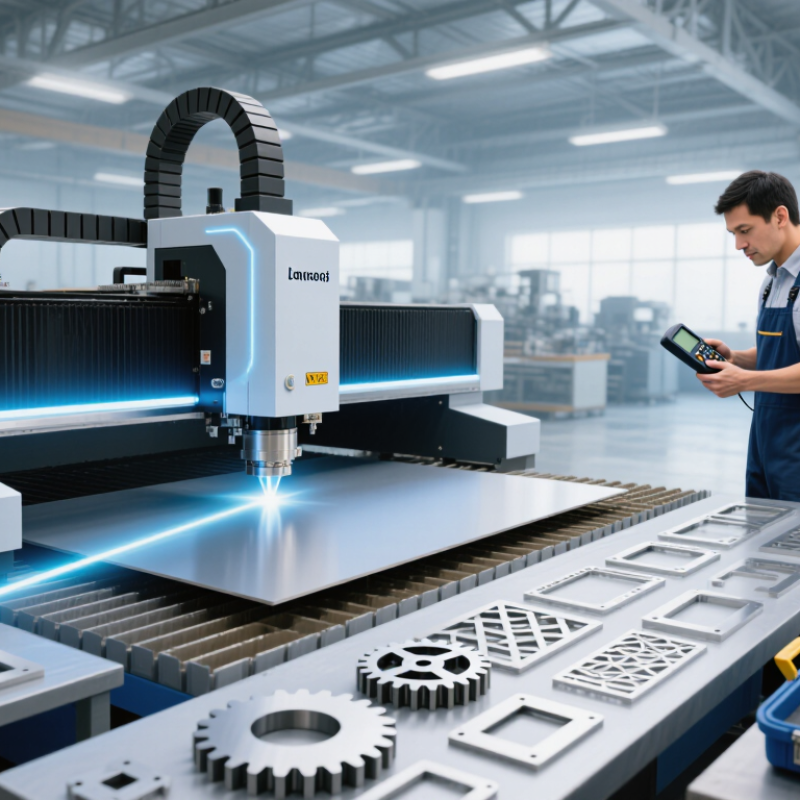
A laser cutter directs a concentrated beam onto a selected path. The material absorbs the energy and melts, burns, or vaporizes, while assist gas clears the cut. This narrow kerf helps produce detailed shapes and clean edges in sheet metal, acrylic, and other suitable materials. On the shop floor, that precision can reduce trimming and help parts fit together with less rework. Not every edge comes out perfect.
Cut quality depends on more than the beam. Material thickness, focus position, speed, and power all affect the result. A slow pass may leave excess heat; a fast one can fail to cut through. Operators often test settings on scrap, then inspect the edge for burrs, discoloration, or taper. The process also has limits: reflective or heat-sensitive materials may need special handling, and thick stock can require another cutting method.
Tip: Keep the lens and work surface clean, secure the sheet flat, and check focus before production. Make a small test cut when changing materials or thickness. Record settings that work, but verify them again; even familiar stock can vary slightly between batches.
Laser type affects how energy couples into a material. SPIE’s Handbook of Laser Technology and Applications gives the familiar industrial wavelengths: fiber lasers operate near 1.06 μm, while CO₂ lasers emit at 10.6 μm. That tenfold difference matters at the cutting head. Many metals absorb near-infrared energy more readily, so fiber systems can cut thin steel quickly and produce a narrow kerf. The beam also travels through flexible fiber delivery, which can simplify machine layouts.
CO₂ remains useful for materials such as acrylic, wood, and some textiles, where its longer wavelength is absorbed effectively. It can also cut metal, but settings, assist gas, and optics need careful matching. Check the actual material response, not just the laser label. A 0.5 mm stainless sheet and a thick plate behave very differently. Industry technical references, including SPIE’s laser-processing handbooks, emphasize that wavelength, power, focus, and material properties work together. The wavelength alone is not a buying guide. That rule is useful, but incomplete. In practice, a small change in focus or surface condition can alter the edge far more than expected. I would test the exact grade and thickness before committing to a production setting.
Fiber lasers typically operate near 1.06 μm, while CO₂ lasers operate at 10.6 μm. Wavelength affects how laser energy interacts with different materials, but cutting performance also depends on factors such as material type, thickness, power, and process settings.
Why Is Laser Cutting Important in Manufacturing 7 Tips?
Laser cutting is important because it can produce detailed parts with narrow cuts and limited material waste. The kerf is the width of material removed by the beam. Typical laser kerfs measure about 0.1–1 mm, but that range is only a guide. Material type, thickness, focus, and cutting speed all affect the result. A 0.2 mm kerf may suit thin sheet, while thicker stock can require a wider allowance. Small differences matter when slots must fit tabs or moving parts.
Tips: Check kerf on a sample from the same material and thickness. Measure the cut with calipers, then adjust the drawing if needed. Keep a note of settings. It saves time later.
A narrow kerf can help preserve material and create fine features, but it does not guarantee a perfect edge. Heat may discolor some metals or leave roughness on certain plastics. I would not rely on a nominal kerf value alone; shop conditions change, and test cuts can expose that. Inspect edges and dimensions before running a full batch. A simple test piece with a slot and a corner is useful. That extra check can prevent parts from binding during assembly.
| Tip | Manufacturing factor | Typical value or fact | Why it matters |
|---|---|---|---|
| 1 | Account for kerf width | Laser kerfs are commonly about 0.1–1 mm wide; the actual width depends on the material, thickness, laser, and cutting settings. | Kerf is the material removed by the cut. Include it in part dimensions and toolpaths to help achieve the intended fit. |
| 2 | Match the process to the material | Fiber lasers are widely used for metal sheet cutting, while CO2 lasers are commonly used for many non-metallic materials and some metals. | Material type and thickness affect how the laser is absorbed and which process can produce a suitable cut. |
| 3 | Check the required thickness | Maximum cut thickness is machine- and material-specific; there is no single thickness limit that applies to all laser cutters. | Confirm the machine’s rated capacity for the exact material and quality requirement before planning production. |
| 4 | Choose an appropriate assist gas | Assist gas helps remove molten material from the cut. Oxygen can support cutting of carbon steel, while nitrogen is often used when oxidation on the cut edge should be limited. | Gas choice influences cut quality, edge condition, and operating cost. Follow the machine and material specifications. |
| 5 | Allow for heat effects | Laser cutting is a thermal process, so a heat-affected zone can occur near the cut edge; its size varies with material and process settings. | For heat-sensitive parts or tight edge requirements, validate the settings and inspect sample cuts before full production. |
| 6 | Optimize part layout | Nesting places multiple parts within a sheet to reduce unused material; achievable savings depend on part geometry, spacing, and sheet size. | Efficient layouts can improve material utilization, but adequate spacing and cutting sequence are still needed for reliable production. |
| 7 | Maintain consistent setup | Focus position, nozzle condition, assist-gas settings, and cutting speed all affect cut quality and repeatability. | Use a documented setup and routine inspection to reduce variation, rework, and unexpected downtime. |
Values and process outcomes vary by machine, material grade, thickness, and operating conditions. Verify critical dimensions and edge requirements with test cuts and the equipment supplier’s specifications.
Planning a laser cut starts with the material, not the machine’s maximum power. Mild steel, stainless steel, and aluminum react differently to heat and assist gas. Measure the actual sheet thickness, including any variation, before choosing a starting recipe. Grand View Research estimated the global laser-cutting-machine market at USD 5.2 billion in 2023, reflecting broad industrial use, but market growth does not guarantee a good cut.
Match power and speed as a pair. Thick sections generally need more energy per unit length; excessive speed can leave an incomplete edge, while excessive heat may widen the kerf. Select assist gas for the material and finish: oxygen can support cutting carbon steel, while nitrogen helps limit oxidation on stainless steel. Use the machine’s approved parameter chart, then test a small coupon. Small changes matter.
Check the edge under consistent light. ISO 9013 classifies thermal-cut quality using measures that include perpendicularity tolerance and mean profile height. Record the material grade, thickness, power, speed, gas, and nozzle condition with each test. In practice, a chart is only a starting point; focus drift or a worn nozzle can undo a sound setup. I still recheck the first production part, because a clean sample does not prove every sheet will behave the same way.
Laser cutting earns its place when parts fit, edges are clean, and production costs stay predictable. Treat each job as a set of checks, not a machine setting to copy blindly. Measure critical dimensions after the part has cooled, then compare them with the drawing’s tolerances. Check kerf compensation on slots and holes; a small offset can turn a snug joint into a loose one. Inspect cut edges for dross, taper, and heat marks under consistent lighting. A bright edge is not always a good edge if the part still needs sanding. Then compare several pieces from different points in the run. One sample can mislead.
Confirm that the material grade and thickness match the approved job setup, since variation can affect cut quality. Verify extraction, guarding, and interlocks before production, and follow the site’s operating procedures. Finally, calculate cost per usable part—not just cutting time. Include setup, sheet yield, assist gas, consumables, inspection, and rework. Track the actual cycle time for a representative batch; estimates can be optimistic. It is tempting to accept the first successful piece and move on. That habit deserves a second look, especially when dimensions or edge finish vary across a full sheet.
Fiber lasers operate near 1.06 μm, while CO₂ lasers use 10.6 μm. Wavelength affects how energy interacts with each material.
Fiber lasers often cut thin metals efficiently. CO₂ lasers can suit acrylic, wood, and some textiles.
Match power and speed to the material and thickness. Test a small coupon before using a production setting.
Oxygen can support carbon-steel cutting. Nitrogen can help limit oxidation on stainless steel.
A 0.5 mm sheet and a thick plate need different settings. Surface condition and focus can change the cut, too.
Inspect for dross, taper, and heat marks under consistent lighting. Small changes matter.
Check dimensions after parts cool, and inspect pieces from different areas of the sheet. One sample can mislead.
Include setup, sheet yield, gas, consumables, inspection, and rework. Cutting time alone can give an overly hopeful estimate.
Laser cutting uses a concentrated beam of light to separate material along a planned path, producing precise shapes with a narrow kerf that commonly measures about 0.1–1 mm. The process can reduce material waste and support detailed designs, but results depend on choosing a laser suited to the job. Fiber lasers operate near 1.06 μm, while CO₂ lasers operate at 10.6 μm; their different characteristics make material type and thickness important considerations.
Understanding why is laser cutting important in manufacturing starts with matching the process to production needs. Plan each cut by balancing material, thickness, laser power, cutting speed, and assist gas. Before production, check that the required tolerances are achievable, inspect edge quality, confirm safe operating practices, and estimate the cost per part. These seven checks help manufacturers decide whether a setup can deliver consistent parts efficiently, rather than relying on speed or precision alone.