Datum Machine
Datum Machine
Datum Machine
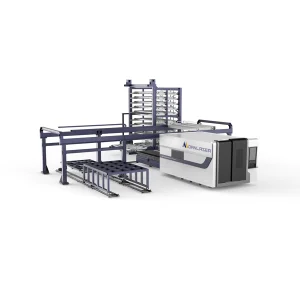
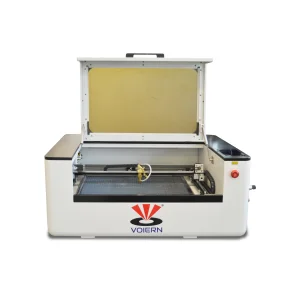
Explore our premiere high-efficiency automated CNC fiber laser setups built for integration within Indonesian heavy industries.
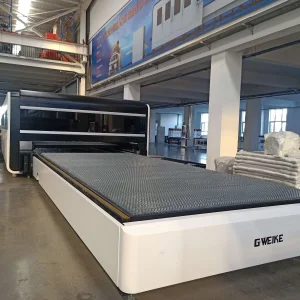
Jakarta, as the central economic engine of Indonesia, along with its massive industrial satellites spanning Bekasi, Karawang, Cikarang, and Tangerang (collectively known as Greater Jakarta or Jabodetabek), is undergoing a profound paradigm shift. This region hosts Southeast Asia's densest concentration of automotive assembly plants, heavy metal fabricators, infrastructure suppliers, and consumer electronics plants. To remain competitive in a margin-sensitive global supply chain, local operations are transitioning rapidly from traditional mechanical stamping and manual fiber laser operations to highly sophisticated, fully integrated, and automated laser cutting lines.
Under the Indonesian government's "Making Indonesia 4.0" roadmap, manufacturing entities must optimize resource efficiency, lower carbon footprints, and dramatically reduce cycle times. Automated laser cutting lines bypass the bottlenecks associated with manual material handling. Raw metal coils, heavy H-beams, and complex hollow sections are loaded dynamically, processed with sub-millimeter precision, and sorted without human intervention. This directly translates to maximized uptime and a drastic reduction in manual work hazards.
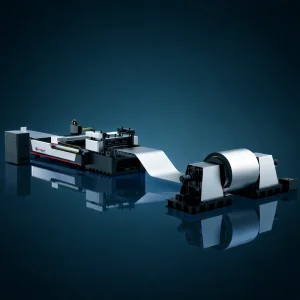
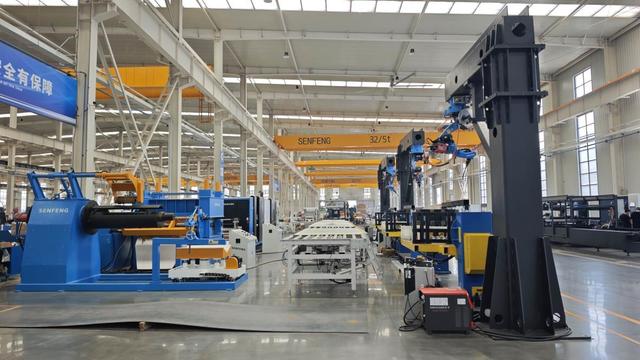
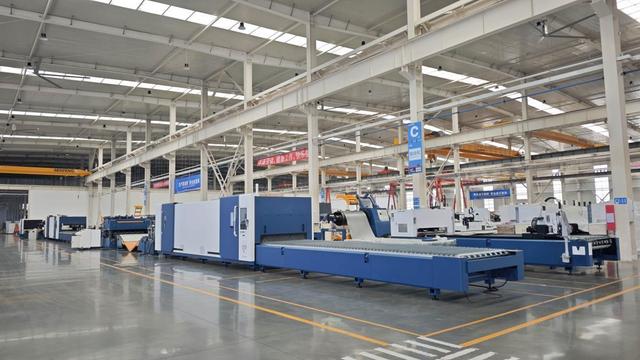
Conventional metal fabrication practices operate on discrete processes: shearing, blanking, stacking, loading, cutting, and sorting. This segmented approach introduces high logistics costs, material damage risks, and spatial inefficiencies. In contrast, modern automated laser cutting lines integrate uncoiling, straightening, high-speed fiber laser cutting, and automatic robotic sorting into one continuous process flow. By leveraging high-power fiber laser sources (ranging from 3kW up to 60kW), these lines cut structural steels, high-alloy aluminum, and reflective metals with unmatched precision.
For large-scale international exporters in Jakarta, integrating coil-fed systems offers a game-changing commercial advantage. Because coils are significantly cheaper than pre-cut flat sheets, procurement costs drop by 10% to 15%. Concurrently, nested cutting layouts run continuously without plate-boundary limitations. Sheet utilization improves by up to 95%, virtually eliminating waste. Combined with advanced nesting systems (such as Cypcut AI and CAD/CAM software integrations), manufacturers can dynamically adjust designs in real-time, executing just-in-time (JIT) parts fabrication matching local assembly lines.
By consolidating sheet processing steps into a single integrated line, factories save thousands of square meters in warehouse footprint. Advanced gantry structures, combined with dual-motor rack-and-pinion transmission systems, allow stable accelerations up to 2.5G. This performance level ensures consistent quality on complex geometry blanking, leaving no slag, micro-burrs, or thermal distortions.
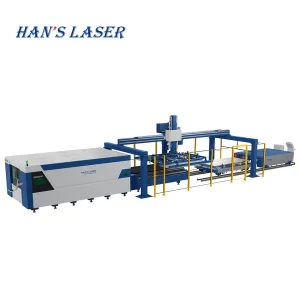
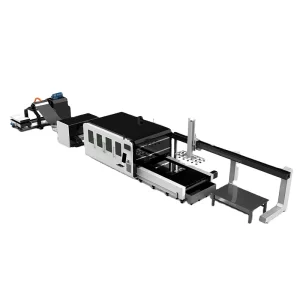
Select production setups optimized for automated sheet loading, continuous material feeding, and high-performance output.
As industrial demands escalate, global procurement teams face structural hurdles: hyper-inflated component lead times, high logistics friction, and inadequate engineering support. Here, Shanghai Datum Machine Co., Ltd. positions itself as a premier partner by combining state-of-the-art Chinese manufacturing efficiencies with high-end, field-proven automation technologies.
Our China Factory 4.0 architecture leverages deep integration with premier hardware brands. We utilize precision Japanese Yaskawa and Fuji servo motors, robust Taiwan HIWIN linear guide rails, and intelligent Cypcut and Beckhoff numerical control (CNC) platforms. This guarantees that our automated laser cutting lines are not only highly efficient but also fully resilient against individual component supply shocks. Shanghai Datum Machine's localized fabrication hubs enable fast turnaround times on customized setups, complete engineering simulation models, and reliable global shipping directly to Indonesia's main sea ports (e.g., Tanjung Priok).
| System Attribute | Shanghai Datum Factory 4.0 Standards | Traditional Regional Assemblers |
|---|---|---|
| Frame Architecture | Thermal-stress annealed plate welded structural gantry (lifespan >20 years) | Standard iron profile welded structure (susceptible to thermal distortion) |
| CNC Software | Deep integration with AI-enhanced nesting software (Cypcut / Beckhoff EtherCAT) | Basic manual g-code interfaces with high setup delays |
| Fiber Optical Integration | Sealed IP65 optical cabinet housing with active liquid chilling | Standard cabinets prone to dust ingress and temperature instability |
| Continuous Operational Load | Tested for 24/7 continuous blanking operations | Recommended cooling downtime required periodically |
Automated sheet and tube processing equipment is not a one-size-fits-all solution. Different industrial operations demand tailored parameters and handling processes. Below are key application scenarios where our automated laser lines excel in the Indonesian landscape:
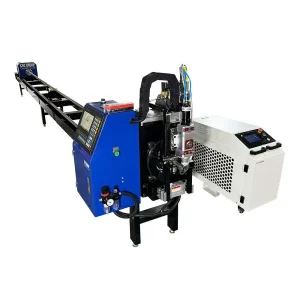
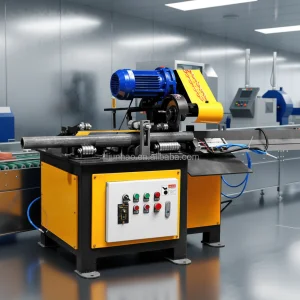
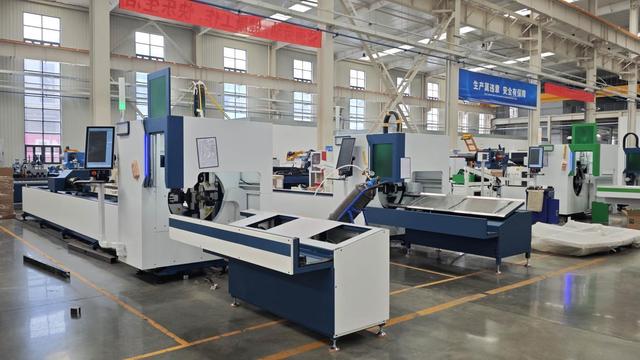
The manufacturing corridors of Karawang require high-cadence production of structural chassis components, exhaust pipes, and internal reinforcements. Fully automatic tube laser lines process round, square, and rectangular stainless steel tubing continuously. Integrated bundle loaders deposit full bundles of raw pipes, which are gripped, measured, cut, and discharged automatically.
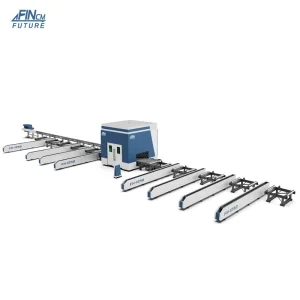
For marine expansion and port terminal construction projects, structural H-beams require drilling, beveling, and clean cutting. The integration of 3D swing cutting heads allows beveling at angles up to 45 degrees, preparing thick structural plates and beams for welding in a single step.
Precision is vital when fabricating cold-rolled sheet steel for distribution panels and telecommunications racks. Combined coil-fed uncoiling, leveling, and high-speed laser cutting setups process thin sheet metals rapidly. This process eliminates the shearing stage, producing pre-punched, pre-slotted blanks ready for mechanical press braking.
Select from our extensive global catalog, featuring specialized systems optimized for Indonesian industry specifications.
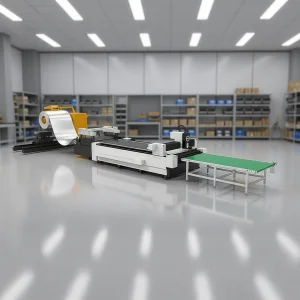
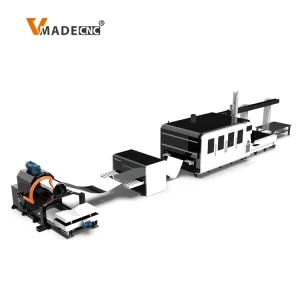
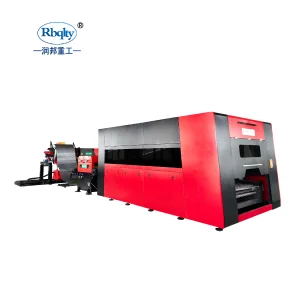
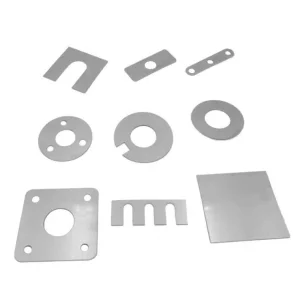
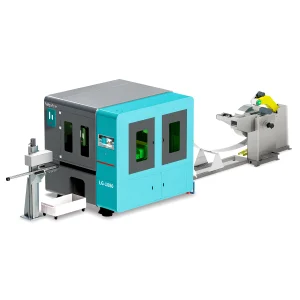
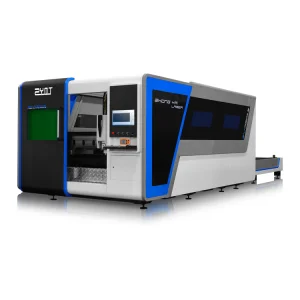
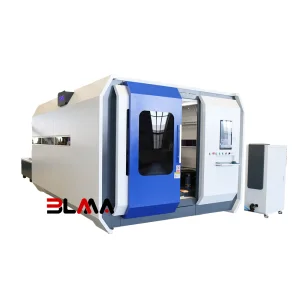
Shanghai Datum Machine Co., Ltd. is a leading China automation laser cutting manufacturer specializing in high-performance fiber laser cutting systems, advanced CNC cutting technologies, and smart factory solutions for global industrial buyers. Backed by decades of combined experience in mechanical engineering and control software integration, we are committed to engineering automation setups that increase processing speeds, enhance cutting accuracy, minimize material waste, and optimize long-term operational efficiency.
Our expansive product portfolio spans industrial fiber laser systems, CNC cutting equipment, heavy-duty tube processing lines, continuous sheet metal solutions, robot-guided laser welding/cutting, and automated loading/unloading configurations. Each unit is built under strict ISO quality control protocols to ensure compliance with European CE and international safety standards. With partnerships with premier component brands (including IPG, Raycus, Yaskawa, Cypcut, and HIWIN), Shanghai Datum Machine Co., Ltd. remains a trusted partner for global manufacturers seeking smart, sustainable growth through laser technology.
Understanding local operational parameters, supply chain logistics, and maintenance constraints is critical to ensuring your capital investment pays off. Read our engineering team's direct responses to the most common procurement inquiries.
Our standard automated laser lines are designed for 380V/50Hz 3-phase industrial power supply, which is standard in Indonesian industrial parks like MM2100 and Cikarang. If your facility has voltage fluctuations, we install high-precision automatic voltage stabilizers (AVS) and isolation transformers to safeguard the sensitive fiber laser resonance cavities and CNC gantry servo systems from damage.
We provide a comprehensive technical deployment package. Once your machinery arrives at Tanjung Priok port, our specialized technical field service engineers coordinate on-site installation, precision leveling calibration, and path tuning. We conduct on-site operator training classes covering CAD/CAM software imports, nesting optimizations, safe laser operations, and standard preventative maintenance routines.
A standard custom automated line takes 45 to 60 days to manufacture, calibrate, and test in our factory, followed by approximately 15 to 20 days of sea freight transit to Jakarta. This brings total project delivery times to roughly 75 to 80 days. A detailed production roadmap, factory acceptance test (FAT) videos, and transport updates are provided throughout the cycle.
Our machines utilize Cypcut AI/Lantek nesting systems. Instead of treating sheets as discrete rectangles, the continuous coil processing layout places components in interlocking orientations across the length of the metal roll. This allows components to nest past standard plate boundaries, reducing skeleton waste to below 5% compared to typical 15-20% losses on manual sheet systems.
Regular maintenance is straightforward. Daily checks include optical protective window inspections, slag clearing, and slide rail wiping. On a bi-weekly to monthly basis, we recommend automatic lubrication system checks, chiller fluid purity assessments, and exhaust filter cleaning. Our machines feature integrated telemetry modules to warn operators of temperature fluctuations or optical back-reflection issues before mechanical wear occurs.
Get in touch with our applications engineers to design a custom layout, secure technical specifications, and receive a competitive quote for your facility in Jakarta or global industrial sites.
Request a Custom Quote Now →