Datum Machine
Datum Machine
Datum Machine
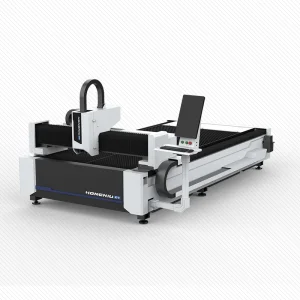
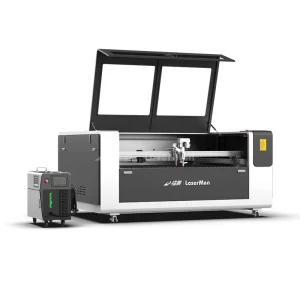
A technical assessment of high-power density beam profiling, assist gas dynamics, and micro-precision engineering.
The global metalworking landscape has undergone a tectonic shift over the last decade. Traditional mechanical stamping, punching, and plasma processing are rapidly giving way to high-brightness Fiber Laser Technologies. In the realm of industrial metallurgy, the demands for tighter tolerances, minimized heat-affected zones (HAZ), and extreme processing speeds are no longer optional—they are core business imperatives. Shanghai Datum Machine Co., Ltd. stands at the forefront of this industrial transformation as a premier China automation laser cutting manufacturer, engineering solutions that redefine throughput and precision.
Modern laser cutting techniques rely on complex interactions of physical parameters. When a high-intensity laser beam strikes a metal sheet, it initiates rapid melting, vaporization, or chemical combustion. The choice of assist gas—whether oxygen ($O_2$), nitrogen ($N_2$), or compressed air—fundamentally dictates the surface quality of the cut. Oxygen assist induces an exothermic reaction, ideal for thick carbon steels, while nitrogen is utilized to blow away molten metal without oxidation, yielding clean, shiny, paint-ready edges on stainless steel and aluminum. For automated systems, maintaining the optimal standoff distance between the nozzle and the workpiece is crucial. Real-time capacitance-based height sensors adjust the focal position within milliseconds to maintain stability over uneven surfaces.
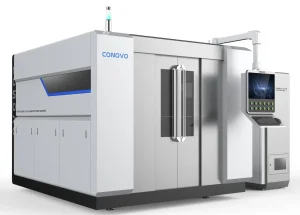
Shanghai Datum Machine Co., Ltd. is a professional China automation laser cutting manufacturer specializing in fiber laser cutting systems, CNC cutting solutions, and smart manufacturing equipment for global industrial customers. With extensive experience in advanced manufacturing technologies, we are dedicated to providing high-performance automation solutions that improve productivity, precision, and operational efficiency across a wide range of industries.
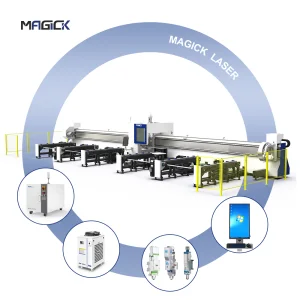
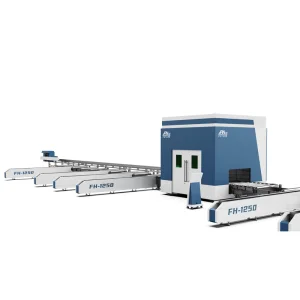
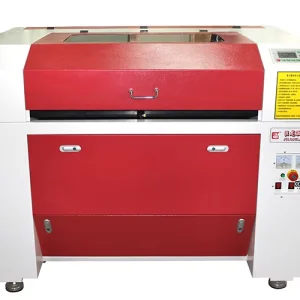
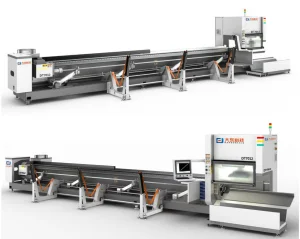
Our product portfolio includes fiber laser cutting systems, CNC laser cutting equipment, tube laser cutting machines, sheet metal processing solutions, robotic laser cutting systems, automated loading and unloading systems, laser production lines, and customized manufacturing automation solutions. Designed to meet the evolving demands of modern factories, our equipment delivers exceptional cutting accuracy, high-speed performance, reduced material waste, and reliable long-term operation.
At Datum Machine, innovation is at the center of our development strategy. Our engineering team continuously integrates intelligent control technologies, automation systems, and advanced manufacturing concepts to help customers build more efficient and flexible production environments. From standalone laser cutting equipment to fully integrated smart factory solutions, we provide comprehensive support tailored to each customer's production requirements.
Quality and reliability are fundamental to our manufacturing philosophy. We maintain strict quality control procedures throughout design, production, testing, and delivery to ensure every system meets international performance and safety standards. Our modern manufacturing facilities and experienced technical team enable us to provide consistent quality and dependable service for customers worldwide. Serving clients across automotive, metal fabrication, machinery manufacturing, construction, aerospace, electronics, and industrial processing sectors, Shanghai Datum Machine Co., Ltd. has established a strong reputation for advanced technology, customized solutions, and responsive customer support.
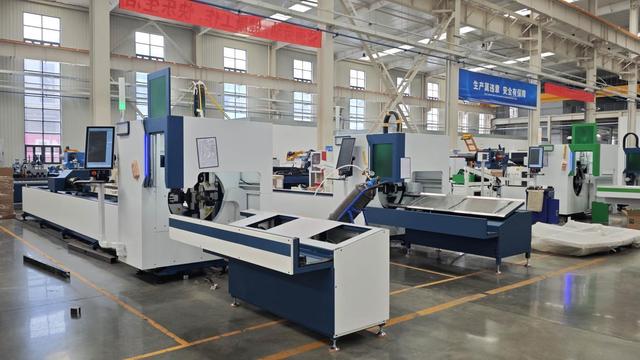
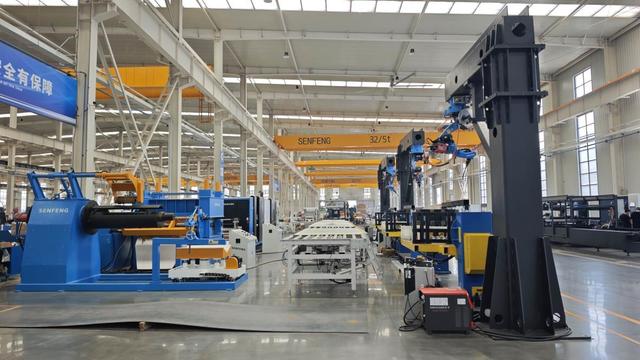
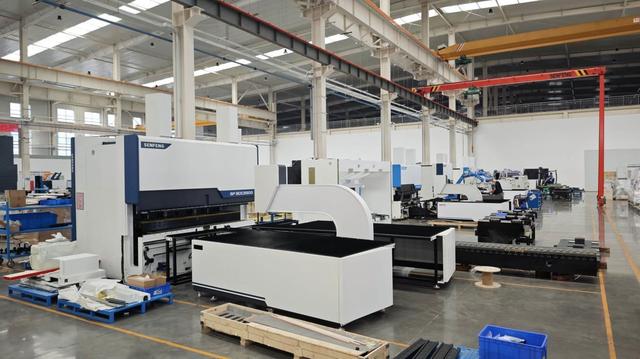
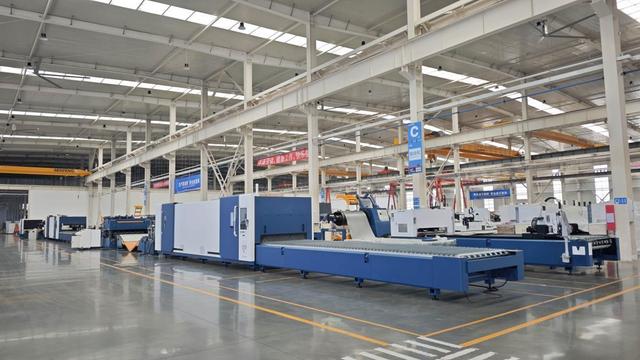
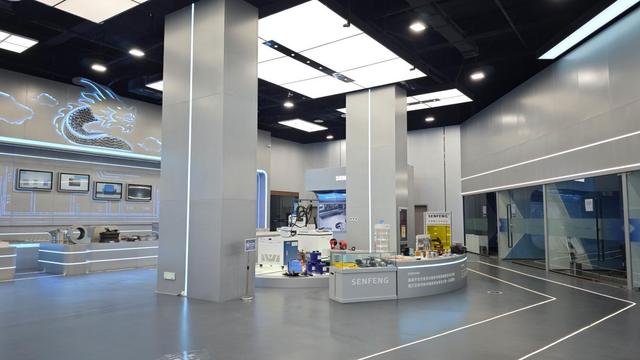
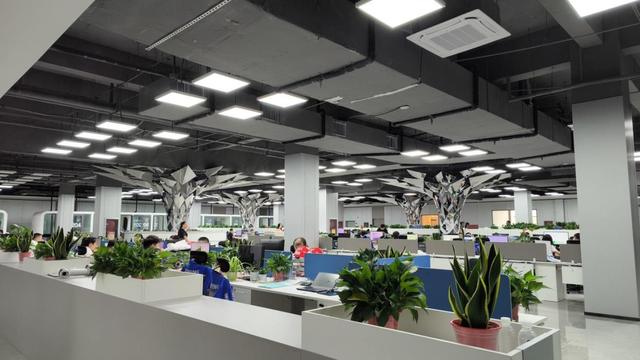
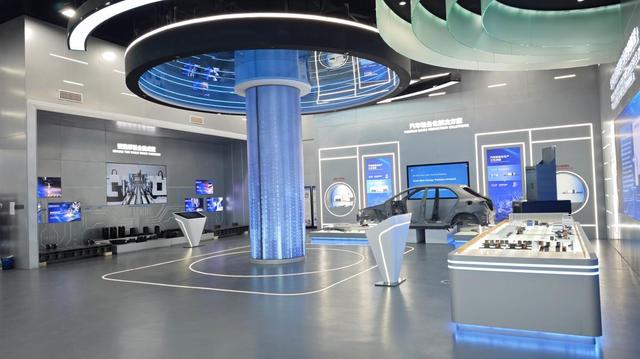
An in-depth analysis of supply chain demands, custom engineering specifications, and ROI drivers in advanced manufacturing sectors.
In the current macroeconomic climate, global procurement officers look beyond base equipment costs. They calculate the total cost of ownership (TCO), focusing on energy efficiency, maintenance cycles, and machine uptime. High-power fiber lasers operate with a wall-plug efficiency of over 35-40% compared to just 10% for older CO2 systems. This means dramatic electricity savings when running 24/7 manufacturing plants. Furthermore, components like automatic exchange tables, dual pneumatic chucks, and dynamic nesting algorithms (such as those integrated into Cypcut FSCUT 8000 or Weihong LS3000 control systems) directly maximize yield from raw sheet metal, reducing scrap rates by up to 18%.
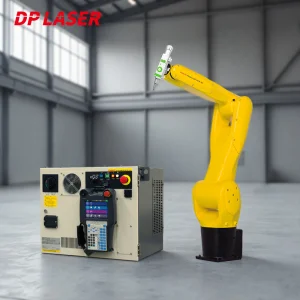
Another major trend is the migration from planar 2D cutting to multi-axis 3D processing. For complex geometries, such as hydroformed automotive parts or architectural hollow structural sections (HSS), a 3-dimensional profile cutter is essential. By pairing a 6-axis articulated robot or cobot with a fiber laser head, operators can execute bevel cuts, compound angles, and intricate slot patterns in a single setup, eliminating multiple secondary operations like drilling and deburring.
We tailor laser system configurations including customized gantry dimensions, localized software integrations, laser power scaling (1kW to 40kW), and automation interfaces matching existing MES/ERP networks.
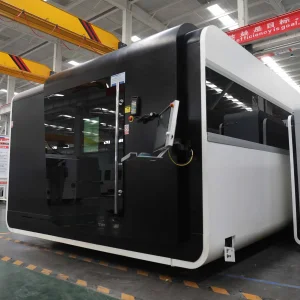
Each fiber laser cutter is built to strict international safety baselines, featuring CE certifications, fully enclosed Class 1 laser safety housings, safety interlocks, and active exhaust filtration systems.
From site preparation layout schematics, electrical grounding diagnostics, and on-site alignment tests to local engineer training and rapid-ship spare part hubs in key economic zones.
| Performance Indicator | High-Power Fiber Laser (Datum Spec) | Traditional CO2 Laser Systems | Industrial Plasma Cutters |
|---|---|---|---|
| Wavelength | 1.07 μm (High metal absorption rate) | 10.6 μm (Reflective on non-ferrous metals) | N/A (Arc-based) | Wall-Plug Efficiency | 35% - 45% | 8% - 12% | 85% (High direct power draw) |
| Cutting Precision (Kerf width) | 0.05 mm - 0.1 mm | 0.15 mm - 0.25 mm | 0.5 mm - 1.5 mm |
| Heat Affected Zone (HAZ) | Extremely Narrow (Preserves structural integrity) | Moderate | Wide (Requires post-cut machining) |
| Maintenance Interval | Up to 100,000 hours (Solid-state source) | 2,000 - 4,000 hours (Turbine & mirrors) | Frequent nozzle & electrode swaps |
| Material Compatibility | Stainless steel, Carbon steel, Copper, Brass, Alum | Non-metals, limited reflective metals | Conductive metals only |
Analyzing intelligent monitoring, edge computing, predictive maintenance, and closed-loop control systems.
The convergence of artificial intelligence (AI) and CNC machinery represents the frontier of factory automation. At Datum Machine, we are integrating deep-learning algorithms into our laser heads to perform live kerf monitoring. By analyzing the optical feedback spectrum from the cutting front, the control system dynamically modifies assist gas pressure and feed speed. This closed-loop configuration ensures that if a cut begins to fail (producing dross or incomplete penetration), the machine instantly self-corrects, preventing costly scrap runs.
Furthermore, cloud-based predictive maintenance is transforming support models. Our fiber systems track the degradation curves of collimator lenses, protective windows, and servo-drive currents. The system flags variances before a mechanical failure occurs, automatically queuing a service request. This transition from reactive troubleshooting to scheduled maintenance maximizes plant efficiency and protects key components from catastrophic failure.
Navigating machinery directives, hazardous gas extraction protocols, and certified electrical topologies.
Shipping complex industrial laser machinery across borders involves strict regulatory hurdles. Exporters must conform to local electrical standards, including UL/CSA standards in North America and CE directives in the European Union. A key factor is safety compliance: class 4 laser sources require strict safety features to protect operators from stray radiation. At Datum Machine, our enclosures utilize specialized glass viewing windows rated for fiber wavelengths (typically 1030nm to 1080nm) and dual-channel safety relays that halt operations instantly if a panel door is opened.
Additionally, processing materials like galvanized sheets, stainless steels, and engineered polymers releases hazardous particulates and fumes. Incorporating high-volume extraction units equipped with HEPA and activated carbon filtration is a core safety standard. Our systems interface directly with external dust collectors, initiating extraction cycles automatically when the laser beam fires to ensure clean air is maintained in the production facility.
Dross, or residual molten slag on the bottom edge of a cut, occurs when molten metal is not fully ejected by the assist gas stream. This is typically caused by incorrect nozzle standoff heights, low assist gas pressure, or a mismatch in cutting speed and laser focal point settings.
Our Cypcut and Weihong control systems mitigate this by integrating real-time gas pressure monitoring and automated focal adjustment. The systems automatically adjust the gas delivery pressure based on material-specific parameters, and high-frequency capacitance sensors keep the distance between nozzle and workpiece stable within ±0.1mm, ensuring clean dross-free edges.
Reflective metals absorb only a tiny fraction of the laser's energy at the initial phase of the cut, reflecting the rest back up the optical path. This back-reflection can travel back into the resonator cavities of the fiber source, causing optical damage to the laser module.
To prevent this, Datum Machine utilizes advanced fiber laser sources equipped with isolators. These isolators absorb and divert reflected energy before it reaches the active modules. Additionally, starting cuts with high-frequency pulsing and high assist gas pressure helps establish rapid energy absorption, establishing a keyhole melt pool that reduces reflection.
Helical rack-and-pinion drives use precision gears to translate rotational torque from servo motors into linear motion. They offer high mechanical load capacity, making them ideal for heavy-duty tables. Linear motors, conversely, use magnetic fields directly to drive the axis, eliminating physical contact and gear wear.
While linear motors offer superior acceleration (up to 2.0G) and higher positioning speeds, they require strict dust protection to keep metal particulates off the magnetic rails. Datum Machine evaluates customer requirements, providing helical configurations for standard heavy industries and linear motors for ultra-high-speed thin-sheet metal fabrication.
On standard laser cutters, a machine must sit idle while an operator unloads finished parts and loads a raw sheet. This process can take several minutes. With an exchange table, one bed processes parts inside the safety enclosure while the second bed is unloaded and reloaded outside.
Once the cutting cycle finishes, the tables swap positions automatically in 15 to 20 seconds. This setup keeps the laser beam operating continuously, increasing machine utilization rates from 50% to over 85%.